Curriculum-aligned learning: what it actually means for your child
Every online learning tool claims to be "curriculum-aligned". Here is what that phrase really means, and how to check whether a program lives up to it.
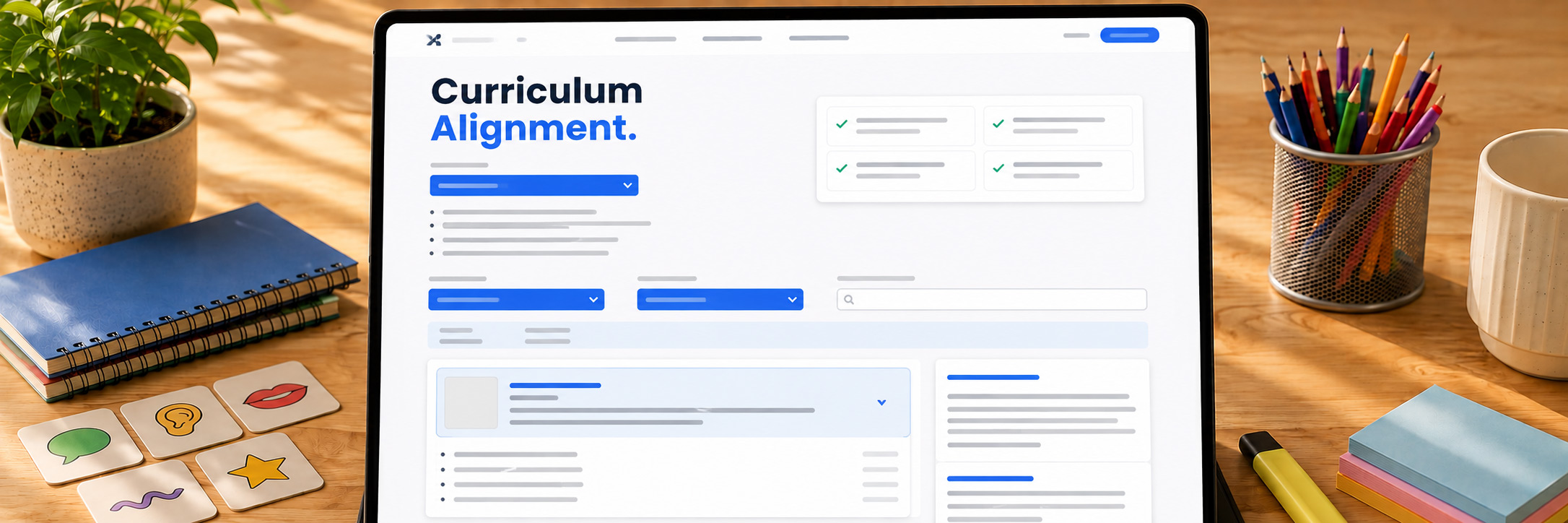
Many online learning tools describe themselves as "curriculum-aligned". Here's what that phrase should mean, and how to tell whether a program lives up to it.
"Curriculum-aligned" has become one of the most common promises made by online learning programs.
But look more closely, and you'll find enormous variation: some platforms map each activity to a specific curriculum content description or outcome, while others simply add broad year-level labels to their catalogue.
Here's how to tell the difference.
What meaningful curriculum alignment looks like
A strongly aligned program does three things:
- Each activity maps to a specific content description, outcome or standard in the relevant framework. In the Australian Curriculum, for example, content descriptions have unique codes.
- The breadth of coverage is clear. A program can be accurately aligned without covering everything, but it should be transparent about any gaps. A program marketed as comprehensive should cover the full range of relevant content, not only the areas that are easiest to turn into online activities. In mathematics, that means representing measurement, space, statistics and probability as well as number and algebra.
- Mappings identify the curriculum version and are kept current. When a curriculum changes, the program should review its content and update the relevant mappings.
If a program cannot show which specific content description, outcome or standard an activity addresses, its topics may overlap with the curriculum, but it is not demonstrating curriculum alignment.
How to check
Try these three quick tests:
- Search for a specific curriculum code. Rather than searching only for a broad topic such as "fractions", try a code such as AC9M5N03. Can the platform show you which activities address that content description? If not, its alignment may be superficial.
- Look for a coverage map. A well-aligned platform should show what it covers for a particular year level, and where any gaps remain. Vague answers are a red flag.
- Check the curriculum version. The platform should state whether its mappings relate to the Australian Curriculum Version 9, an earlier version, or a particular state framework. Saying only "aligned to ACARA" is not enough.
What we do at Studyladder
Studyladder activities are mapped to specific curriculum content descriptions, outcomes or standards. Teachers can filter activity searches by year level and strand, then see exactly which curriculum content each activity addresses.
When the frameworks we support are revised, including the Australian Curriculum, the NSW and Victorian curricula, and curricula and standards in New Zealand and the United States, we review and update the relevant mappings to ensure they remain accurate and useful.
Why this matters for parents
Curriculum alignment can make practice more targeted by showing which skills a child has worked on and where additional support may be useful.
If your child is struggling in a particular area, "do more practice" isn't especially helpful. "Complete activities on comparing fractions with related denominators" is specific and actionable.
That's the difference meaningful alignment makes.
Why this matters for schools
Alignment connects student activity and progress data with curriculum content. This can support curriculum planning, parent-teacher conferences, program reviews and progress discussions.
It's the difference between saying, "The students enjoy it", and showing, "Here's what they practised and which curriculum content it covered."
See how our activities map to the curriculum on the curriculum-aligned page, or browse our subject coverage.
Keep reading
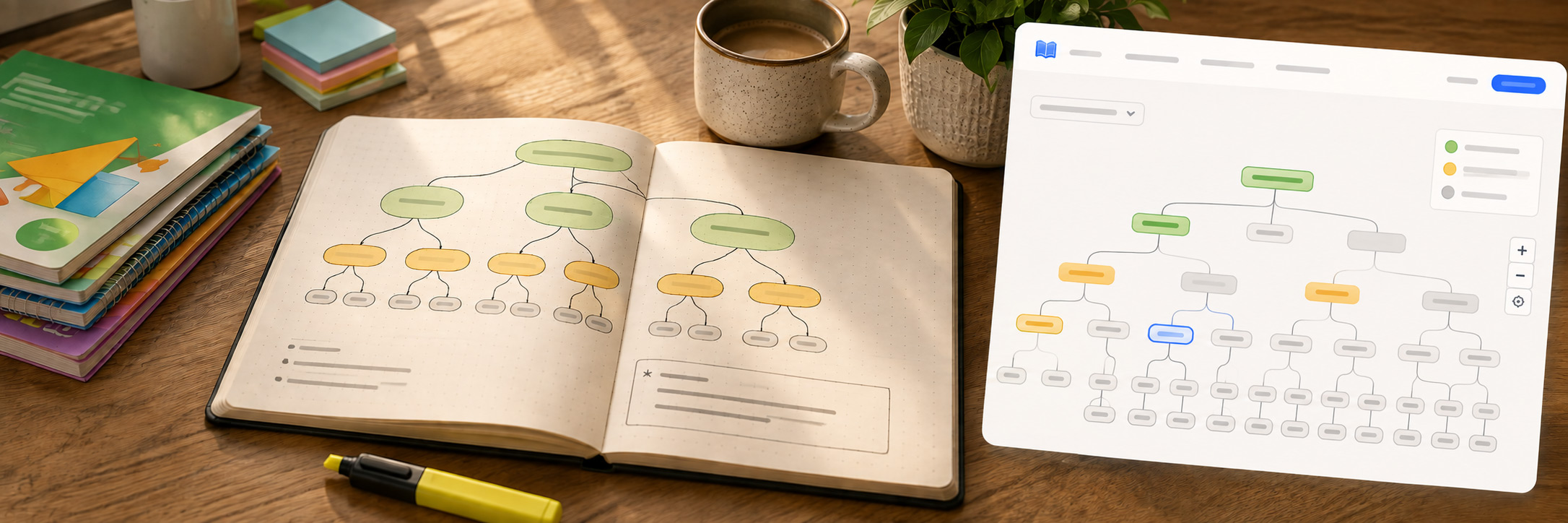
Learning gaps: why prior knowledge matters, and what to do next
A learning gap is not just about being behind. It is a signal that the foundation for the next stage of learning is missing. Here is how to think about diagnosis, prior knowledge and targeted instruction.

Numeracy vs mathematical fluency: what the research actually says
These terms are sometimes used interchangeably, but they are not synonyms. A plain-language explainer for parents, teachers and school leaders.

Why phonics still matters in Year 3 and beyond
Phonics is often treated as a Foundation-Year 2 topic. Here is why it is still doing quiet work in Year 3, Year 4 and further up the school.